Be yourself; Everyone else is already taken.
— Oscar Wilde.
This is the first post on my new blog. I’m just getting this new blog going, so stay tuned for more. Subscribe below to get notified when I post new updates.
Be yourself; Everyone else is already taken.
— Oscar Wilde.
This is the first post on my new blog. I’m just getting this new blog going, so stay tuned for more. Subscribe below to get notified when I post new updates.
How does the portrayal of romance in Hollywood films affect our perspective of love?
From the moment we are born, our parents tell us fairy tales and folk stories, and tuck us in at night with the warming words of a happily ever afters. Our little blank brains, ready to devour anything put in front of us, happily gobble up these fantasy tales of love and adventure, and slowly but surely, based on these tales, we form our understanding of life and love. When I say humans are easily influenceable beings, this should come as no surprise. We’ve all heard of moms in cookie cutter homes whispering to each other about how rap music will turn their kids violent, and although that isn’t technically true, our media consumption does have an effect on us.
The dazzle and charm of romance movies and how they create and alter our views of love is an important aspect to consider when talking about media influence. Researchers at Herriot Watt University in Edinburgh observed couples at their therapy center and noted that most of their conceptions of love, romance and relationships came from misconceptions presented in Hollywood romance films. It’s sad to think that the enchanting glimmer of happy ever afters on screen has set a time bomb in our heads, waiting for our own created sense of love and romance to destroy us when our expectations don’t match our reality. At the end of 50 first Dates, Adam Sandler and Drew Barrymore’s characters, Lucy and Henry, end up getting married and sailing into the sunset into their happily ever after, however what isn’t shown on camera is the hardships of living with a wife with severe brain damage who doesn’t remember you or your child every new morning and on top of that, you’re all living on a boat. Television isn’t a good source of realistic romantic content.
Film depicts the most perfect of life situations and life struggles, and in the end, everything ties up in a pretty bow, ready to be emotionally feasted upon by the viewer. Romance, like all other aspects of film, represents only an almost impossible and highly unrealistic version of love, and as we watch these stories unfold, and characters fall madly in love, we are made believe that this is true romance. At no point do we think “Well maybe this is a bit unrealistic to expect” when watching Heath Ledger sing his love to Julia Stiles in 10 Things I Hate About You, because although we are warned not to violate the copy right laws of the film, we are not warned to watch out for the over exaggerated version of love presented to us on a silver plater.
I remember being seven and sitting down with my mother to watch George of the Jungle. There’s one scene I still remember perfectly, where George’s romantic interest Ursula expresses how she had always dreamt that her first kiss with her soulmate would be so magical that immediately, she would know he is the one. She described her magical moment as the soft song of church bells and the spark, sizzle and explosion of fireworks. This is a moment in my childhood I’ve always thought back to, because for the rest of my life, I dreamt of the spark and sizzle of an explosive kiss just like Ursula had described. When I reached high school and all my friends were having their first kisses, I waited patiently, excited for my own magical moment. Instead, my first kiss tasted like beer and pasta sauce.
I think discussing the influence of media in development is a very important subject to consider and too often not thought of as harmful unless the influence is to be violent. Youths are thrown into life with barely no knowledge of the world around them, and in this modern century, the main way we discover intimacy and life troubles is through media and television. A toddler knows nothing about what true love is, they only develop a concept of it through watching other people in love, and nowadays, their only real examples of close romantic interactions are mostly scripted, filmed, edited, and completed with a killer soundtrack.
Disney is a multimillion dollar industry whose movies are targeted towards young audiences with developing brains. Every year, Disney pumps out another movie about grand adventures, full of life meaning and epic battles between good and evil, but embedded within it’s storyline is always a love story, and the ultimate quest is to find true love. Although, due to criticism, Disney has made an effort to refocus their stories into a feminist mindset, any film made before 2010 still promotes their old values of love before all. Because Disney films are made specifically for young audiences, children don’t have the critical thinking skills to question the values their favourite princesses are trying to spoon feed them, so they gobble it up, trying to recreate what they see on screen within themselves. Based on Grimm fairytales, Disney princess movies have removed the most gruesome parts of the stories, but have kept other aspects that remain just as strange as the original tale. For example, although Sleeping Beauty is woken up by the kiss of a stranger, this is slightly better than the original tale. And although Ariel still gives up her whole life to live on land with a man, at least her ending is happy. Disney values still have a long way to go, but they have tried to make their characters stories’ slightly better than their Grimm beginnings. In their original tales, Sleeping Beauty is woken up by the birthing pains of her rapist’s child, and Ariel gives up her whole life for a prince who doesn’t even chose her, and ends up ending her life out of misery. These old-fashioned values don’t stop once we’ve grown out of princess films, romance films continue to follow us and try to reinforce their same values on us as we keep growing up.
There are multiple tropes presented in Hollywood romance films that seek to alter our perception of love. For example, true love’s first kiss is a famous one. We’ve seen it in countless movies, and awed and gushed as the protagonists immediately fall in love after a single kiss. Or even love at first sight, when our protagonists simply lay eyes on each other and suddenly know they’re in love. If I have to explain why these tropes are unrealistic, you’ve probably never been in love. Love is not instantaneous, love is built, love is earned, love is not felt for every single person you’ve ever been attracted to.
There are many other representation of love presented in films that are quite problematic, but some for different reasons than others. If you’ve watched enough movies, you’ve probably seen a romance storyline based on obsession. By this I mean, a character who, even though has been turned down multiple times, keeps trying to get the attention of the object of their affections. We all remember Twilight as the cultural reset of 2008. All girls ages 8 and up suddenly became obsessed with vampire mythology and their life goals became to fight for the honour of either Edward or Jacob. What might have gone over these obsessed youngster’s head was the film’s skewed sense of romance, and how they portrayed Edward breaking into Bella’s house as she slept a romantic gesture. The problem with this type of romance storyline is that it often promotes extreme behaviour like stalking and deems it romantic, or encourages over the top romantic gestures, and even if the subject of these romantic passes might love these gestures of so called affection on screen, it doesn’t mean a real life person will be comfortable with them off screen.
There are millions of tropes found in films that when transferred into a real-life love story, are nothing but detrimental. Films often depict stories of bad boys meeting the perfect girl next door character, and within the 95 minute run length, she’s managed to change him, and he comes out a better man, leading girls to believe they can change a man if they really put their heart into it, and boys to think a girl can fix them. Or even worse, when the roles are reversed and women feel like they need to change themselves to please a man. Grease is a great musical, full of fun vintage outfits, bold hair styles, lyrics promoting materialism in relationships and sometimes borderline rape-y jokes, but the underlying message of the film remains one that shouldn’t be glamorized. Danny and Sandy’s summer fling turns into a bit more than they thought when they reconnect after the break, and by the end of the musical, Sandy, the former perfect girl next door, is dressed head to toe in leather just to impress her new Boyfriend. I don’t believe that this is an appropriate message to be spreading to young teenagers when they watch a musical. Women and girls shouldn’t be told to change who they are for anyone but themselves.
This brings us to character tropes often portrayed in film. In recent years, the Manic Pixie Dream Girl trope has become a joke amongst film enthusiasts. Coined by film critic Nathan Rabin, the Manic Pixie Dream Girl is quirky, eccentric, different from “other girls”, sometimes she has a tragic backstory, but her sole purpose remains to teach her male counterpart important life lessons so he can grow further and evolve as a character. The MPDG is an object, she has no goals of her own, she is not a real person, she is simply a means to an end.
Because of my coloured-to-death hair, strange sense of style and my one dead parent, I am, apparently, a perfect real-life MPDG. This is not something I am happy about. With the rise of MPDG popularity, I’ve found that some men purposefully seek out girls who fit into this character trope. They want a pretty quirky girl to try and fix them, but as soon as they realize this person they’ve wanted so badly is actually a person and not a recreation of Ramona Flowers, they lose interest. This is the problem with character tropes, they dehumanize people.
Another big problem that can be found in Hollywood romance movies is the complete lack of LGBTQ+ representation. I’ve heard dozens of tales, from gay friends to gay icons, depicting themselves as children madly infatuated with characters of the same sex. I think we can all agree today that there is nothing wrong or unnatural about feeling attracted to someone of the same sex, but children who have seen nothing but heteronormativity expect nothing but heteronormativity in themselves. We’ve all seen For a small child, thinking something is wrong with them for feeling this kind of affection is heart wrenching, and often leads to years of anxiety and build-up pressure about other’s expectations and even of their own regarding their sexuality and attraction.
So where do we go from here? Am I still allowed to watch romance movies? How do I know if I’ve been negatively impacted by watching too many princess films as a child? There are no right or wrong answers! Yes, watch rom-coms to your hearts content! Just keep in mind that what you are watching is a completely fabricated tale that you will sadly never get to experience. Think hard about what you really want out of love, or if your desires are what you’ve been trained to want. Get to know yourself and your needs in life. Romance movies do not have to impact you if you don’t let them. Be aware, be thoughtful, show your kids Disney films released after 2010, and show them that love is not until the happily ever after, but should last long after the credits have stopped rolling.
Donnelly, Elisabeth. “The Manic Pixie Dream Girl May Be Dead, But Film’s Shallow Female Characters Live On”. IndieWire. Retrieved July 15, 2014.
MacDowell, James. Happy Endings in Hollywood Cinema : Cliché, Convention and the Final Couple. Edinburgh University Press, 2013. EBSCOhost, search.ebscohost.com/login.aspx?direct=true&db=nlebk&AN=632678&site=eds-live&scope=site.
Roach, Catherine M. Happily Ever After : The Romance Story in Popular Culture. Indiana University Press, 2016. EBSCOhost, search.ebscohost.com/login.aspx?direct=true&db=nlebk&AN=1190895&site=eds-live&scope=site.
Finn, Christine, et al. “Happily (n)Ever after? Codevelopment of Romantic Partners in Continuing and Dissolving Unions.” Developmental Psychology, Feb. 2020. EBSCOhost, doi:10.1037/dev0000897.supp (Supplemental).
Menise, Tatjana. “Fairy Tales between Transformation and Repetition: How Audiences Rethink the Big Romantic Myth through Disney Princess Stories.” Sign Systems Studies, vol. 47, no. 3/4, July 2019, pp. 526–551. EBSCOhost, doi:10.12697/SSS.2019.47.3-4.08.
Maio, Alyssa. “The Manic Pixie Dream Girl Is Dead.” StudioBinder, 16 Dec. 2019, http://www.studiobinder.com/blog/manic-pixie-dream-girl/.
From the moment we are born, our parents tell us fairy tales and folk stories, and tuck us in at night with the warming words of a happily ever afters. Our little blank brains, ready to devour anything put in front of us, happily gobbles up these fantasy tales of love and adventure, and slowly but surely, based on these tales, we form our understanding of life and love. When I say humans are easily influenceable beings, this should come as no surprise. We’ve all heard of moms in cookie cutter homes whispering to each other about how rap music will turn their kids violent, and although that isn’t technically true, our media consumption does have an effect on us.
To me, the dazzle and charm of romance movies and how they create and alter our views of love is an important aspect to consider when talking about media influence. Researchers at Herriot Watt University in Edinburgh observed couples at their therapy center and noted that most of their conceptions of love, romance and relationships came from misconceptions presented in Hollywood romance films. It’s sad to think that the enchanting glimmer of romance on screen has set a time bomb in our heads, waiting for our own created sense of love and romance to destroy us when our expectations don’t match our reality.
Film depicts the most perfect of life situations and life struggles, and in the end, everything ties up in a pretty bow, ready to be emotionally feasted upon by the viewer. Romance, like all other aspects of film, represents only an almost impossible and highly unrealistic version of love, and as we watch these stories unfold, and characters fall madly in love, we are made believe that this is true romance. At no point do we think “Well maybe this is a bit unrealistic to expect” when watching Heath Ledger sing his love to Julia Stiles in 10 Things I Hate About You, because although we are warned not to violate the copy right laws of the film, we are not warned to watch out for the over exaggerated version of love presented to us on a silver plater.
I remember being seven and sitting down with my mother to watch the George of the Jungle movie. There’s one scene I still remember perfectly, where George’s romantic interest Ursula expresses how she had always dreamt that her first kiss with her soulmate would be so magical that immediately, she would know he is the one. She described her magical moment as the soft song of church bells and the spark, sizzle and explosion of fireworks. This is a moment in my childhood I’ve always thought back to, because for the rest of my life, I dreamt of the spark and sizzle of an explosive kiss just like Ursula had described. When I reached high school and all my friends were having their first kisses, I waited patiently, excited for my own magical moment. Instead, my first kiss tasted like beer and pasta sauce.
I think discussing the influence of media in development is a very important matter that is rarely taken into consideration. Youths are thrown into life with no knowledge of the world around them, and in this modern century, the main way they discover it is through media and television. A toddler knows nothing about what true love is, they only develop a concept of it through watching other people in love, and nowadays, their examples are mostly scripted, filmed, edited, and completed with a killer soundtrack.
Disney is a multimillion dollar industry whose movies are targeted towards young audiences with developing brains. Disney movies are always about grand adventures, full of life meaning and epic battles between good and evil, but embedded within their storylines is always a love story, and the ultimate quest is to find true love. Although, due to criticism, Disney has made an effort to refocus their stories into a feminist mindset, any film made before 2010 still promotes their old values of love before all. Because Disney films are made specifically for young audiences, children don’t have the critical thinking skills to question the values their favourite princesses are trying to spoon feed them, so they gobble it up, trying to recreate what they see on screen within themselves. But these old-fashioned values don’t stop once we’ve grown out of princess films, romance films continue to follow us and try to reinforce their values on us as we keep growing up.
There are multiple tropes presented in Hollywood romance films that seek to alter our perception of love. For example, true love’s first kiss is a famous one. We’ve seen it in countless movies, and awed and gushed as the protagonists immediately fall in love after a single kiss. Or even love at first sight, when our protagonists simply lay eyes on each other and suddenly know they’re in love. If I have to explain why these tropes are unrealistic, you’ve probably never been in love. Love is not instantaneous, love is built, love is earned, love is not felt for every single person you’ve ever been attracted to.
There are many other representation of love presented in films that are quite problematic, but some for different reasons than others. If you’ve watched enough movies, you’ve probably seen a romance storyline based on obsession. By this I mean, a character who, even though has been turned down multiple times, keeps trying to get the attention of the object of their affections. The problem with this type of romance storyline is that it often promotes extreme behaviour like stalking and deems it romantic, or encourages over the top romantic gestures, and even if the subject of these romantic passes might love these gestures of so called affection on screen, it doesn’t mean a real life person will be comfortable with them off screen.
There are millions of tropes found in films that when transferred into a real-life love story, are nothing but detrimental. Films often depict stories of bad boys meeting the perfect girl next door character, and within the 95 minute run length, she’s managed to change him, and he comes out a better man, leading girls to believe they can change a man if they really put their heart into it, and boys to think a girl can fix them.
This brings us to character tropes often portrayed in film. In recent years, the Manic Pixie Dream Girl trope has become a joke amongst film enthusiasts. Coined by film critic Nathan Rabin, the Manic Pixie Dream Girl is quirky, eccentric, different from “other girls”, sometimes she has a tragic backstory, but her sole purpose remains to teach her male counterpart important life lessons so he can grow further and evolve as a character. The MPDG is an object, she has no goals of her own, she is not a real person, she is simply a means to an end.
Because of my coloured-to-death hair, strange sense of style and my one dead parent, I am, apparently, a perfect real-life MPDG. This is not something I am happy about. With the rise of MPDG popularity, I’ve found that some men purposefully seek out girls who fit into this character trope. They want a pretty quirky girl to try and fix them, but as soon as they realize this person they’ve wanted so bad is actually a person and not a recreation of Ramona Flowers, they lose interest. This is the problem with character tropes, they dehumanize human people.
Another big problem that can be found in Hollywood romance movies is the complete lack of LGBTQ+ representation. I’ve heard dozens of tales, from gay friends to gay icons, depicting themselves as children madly infatuated with characters of the same sex. I think we can all agree today that there is nothing wrong or unnatural about feeling attracted to someone of the same sex, but children who have seen nothing but heteronormativity expect nothing but heteronormativity in themselves. For a small child, thinking something is wrong with them for feeling this kind of affection is heart wrenching, and often leads to years of anxiety and build-up pressure about other’s expectations and even of their own regarding their sexuality and attraction.
So where do we go from here? Am I still allowed to watch romance movies? How do I know if I’ve been negatively impacted by watching too many princess films as a child? There are no right or wrong answers! Yes, watch rom-coms to your hearts content! Just keep in mind that what you are watching is a completely fabricated tale that you will sadly never get to experience. Think hard about what you really want out of love, or if your desires are what you’ve been trained to want. Get to know yourself and your needs in life. Romance movies do not have to impact you if you don’t let them. Be aware, be thoughtful, show your kids Disney films released after 2010, and show them that love is not until the happily ever after, but should last long after the credits have stopped rolling.
Donnelly, Elisabeth. “The Manic Pixie Dream Girl May Be Dead, But Film’s Shallow Female Characters Live On”. IndieWire. Retrieved July 15, 2014.
MacDowell, James. Happy Endings in Hollywood Cinema : Cliché, Convention and the Final Couple. Edinburgh University Press, 2013. EBSCOhost, search.ebscohost.com/login.aspx?direct=true&db=nlebk&AN=632678&site=eds-live&scope=site.
Roach, Catherine M. Happily Ever After : The Romance Story in Popular Culture. Indiana University Press, 2016. EBSCOhost, search.ebscohost.com/login.aspx?direct=true&db=nlebk&AN=1190895&site=eds-live&scope=site.
Finn, Christine, et al. “Happily (n)Ever after? Codevelopment of Romantic Partners in Continuing and Dissolving Unions.” Developmental Psychology, Feb. 2020. EBSCOhost, doi:10.1037/dev0000897.supp (Supplemental).
Menise, Tatjana. “Fairy Tales between Transformation and Repetition: How Audiences Rethink the Big Romantic Myth through Disney Princess Stories.” Sign Systems Studies, vol. 47, no. 3/4, July 2019, pp. 526–551. EBSCOhost, doi:10.12697/SSS.2019.47.3-4.08.
Maio, Alyssa. “The Manic Pixie Dream Girl Is Dead.” StudioBinder, 16 Dec. 2019, http://www.studiobinder.com/blog/manic-pixie-dream-girl/.
As Catherine Roach explains in her novel The Romance Story in Popular Culture, “This romance story is endlessly taught and replayed in a multiplicity of cultural sites: Disney princess movies, the wedding industry, fairytales, Hollywood movies, pop music lyrics, advertising, the diamond jewelry industry, and more.” Romance surrounds us, and our ideals of it may be taught to us through film, but our exposure to promotion of the romantic myth follows us out of the theatre and into the real world. In Fairy Tales explored through blah blah blah, Mejene writes about how Disney films, some based on the gruesome fairy tales of the Grimm brothers, leave out the more gory scenes in the film in order to send a happier message about love than the original story does. In the original Little Mermaid story, the prince never falls in love with Arielle, and marries another princess instead. Ariel, heartbroken, decides to kill the prince and his new wife in their sleep, but once she finds herself unable to, decides to kill herself instead. Things do not end well at all in the original story, and so Meneje writes about how “obtaining innocent immortal soul is considered more important than happiness in romantic relationships” at that period, due to religious reasons. Romance interpreted through film is interesting to consider from a religious perspective, especially with the transformation of how religious values are presented through media, and how most the romance myth is learned at a very early age, with Adam and Eve. Biblical values and their interpretations and understandings have changed over the centuries to fit our current society, and biblical references like Adam and Eve have now been reappropriated and repeatedly used as an anti-gay slogan.
Roach, Catherine M. Happily Ever After : The Romance Story in Popular Culture. Indiana University Press, 2016.
Menise, Tatjana. “Fairy Tales between Transformation and Repetition: How Audiences Rethink the Big Romantic Myth through Disney Princess Stories.” Sign Systems Studies, vol. 47, no. 3/4, July 2019, pp. 526–551. EBSCOhost, doi:10.12697/SSS.2019.47.3-4.08.
From the moment we are born, our parents tell us fairy tales and folk stories, and tuck us in at night with the warming words of a happily ever afters. Our little blank brains, ready to devour anything put in front of us, happily gobbles up these fantasy tales of love and adventure, and slowly but surely, based on these tales we form our understanding of life and love. When I say our media intake affects every aspect of our lives, this shouldn’t be news. We’ve often heard the story of suburban moms in cookie cutter homes whispering worries about how rap music will lead their children to violence, and although that might not be completely false, there are infinite other ways our media intake does affect us in more concrete forms. To me, the dazzle and charm of romance movies and how they create and alter our views of love is an important aspect to consider when talking about how media affects us. Researchers at Herriot Watt University in Edinburgh observed couples at their therapy center and noted that most of their conceptions of love, romance and relationships came from misconceptions presented in Hollywood romance films. It’s sad to think that the enchanting glimmer of romance on screen has set a time bomb in our heads, waiting for our created sense of love and romance to destroy us when our expectations and reality don’t match, and how children whose parents have been affected by this get to have their illusions shattered, too.
I remember being seven and sitting down with my mother to watch the George of the Jungle movie. There’s one scene I still remember perfectly, where George’s romantic interest Ursula expresses how she had always dreamt that her first kiss with her soulmate would be magical, and immediately she would know. She said she’d hear the soft song of church bells and the spark, sizzle and explosion of fireworks. This is a moment in my childhood I’ve always thought back to, because for the rest of my life, I dreamt of the spark and sizzle of an explosive kiss just like Ursula described. When I reached high school and all my friends were having their first kiss, I waited patiently, excited for my own wedding bells and fireworks. Instead, my first kiss tasted like beer and pasta sauce.
How do romance movies affect our perspective of love?
(I know this is in the wrong place but I cannot, for the life of me, figure out where it’s supposed to go and how to create the little section that allows you to chose?? I couldn’t find the video explaining it on the class blog and every time I try to figure this out I get frustrated and have to step away from my computer. Technology is too difficult.)
1) Four scholarly sources (journals, peer-reviewed articles, etc.)
2 “On-Topic Sources”
Menise, Tatjana. “Fairy Tales between Transformation and Repetition: How Audiences Rethink the Big Romantic Myth through Disney Princess Stories.” Sign Systems Studies, vol. 47, no. 3/4, July 2019, pp. 526–551. EBSCOhost, doi:10.12697/SSS.2019.47.3-4.08.
This article explained fairy tales and how they are found in Disney movies and how those shape of view of romance.
I think this study was really insightful towards how fairy tales have evolved over time to fit into a feminist perspective. The study explained the importance of such fair tales in our world and how they serve to teach values and concepts to young audiences. It further explains how Disney has made many fairy tales and other cultural tales more accessible to the public. One example given that really stuck out to me was a scene from Cinderella I had completely forgotten about that I will most certainly want to discuss in my article.
Roach, Catherine M. Happily Ever After : The Romance Story in Popular Culture. Indiana University Press, 2016. EBSCOhost, search.ebscohost.com/login.aspx?direct=true&db=nlebk&AN=1190895&site=eds-live&scope=site.
This book discusses a multitude of subject in regards to romance in popular culture, including romance novels, biblical relations, and erotica.
I chose this book because it explored romance culture through a variety of different aspects of our world and lives. The author also wrote about Christianity and how biblical stories are also a big part of the romance perspective and love culture in our society, which is one point I completely forgot about because I’m not religious, but I think this is a good way to contextualize romance in our society. This also gave me the idea I could talk about heterosexuality in my article, and potentially discuss how heterosexual love is also the most prominent form of love shown in movies and media.
2 “Big Picture Sources”
This source discusses the many different medical effects of emotional turmoil caused by divorcing parents.
I chose this source because I think that to properly understand the psychology behind happy endings, I have to properly understand the reality of what happens after the cameras stop rolling. I know many people with divorced parents who have talked about how traumatic the experience was, and this article really helped put those feelings into a picture, I think this text was interesting because it fully explained and gave many examples of the effects of divorce on children but through a medical point of view, as the piece is written through the point of view of a nurse.
This explores and studies the relation between popular music and its effects on children.
I chose this source because exploring gender roles and self identity are two things I would like to talk about in my feature piece. I think exploring how media shapes us into the people we become is very interesting and music wasn’t one of the medias I had thought about before I read this. I thought it was an interesting piece, and explored how children loved certain songs and music videos, and how that affected them. I also enjoyed reading about some of the studies they had on the subject, because I found how they approached studying groups of children very interesting.
2) Four non-scholarly sources (feature stories, blogs, opinion pieces, etc.)
2 “On-Topic Sources”
This article discusses happy endings and the possible reasons we all want them.
I liked this article because it pointed out a couple good reasons for why we crave happy endings and helped contextualize this desire for me with a bigger psychological need. It also mentioned princess movies and how they always ended with the best possible endings and how we are now left with a sense of craving another happily ever after. The main point made for why we crave happy endings is as an escape from our reality, where things aren’t as magical and perfect as they are seen on screen. I like this idea because it’s contrary to the belief that these happy endings will give you unrealistic expectations of the real world.
2) Are Romantic Movies Bad for You?http://content.time.com/time/health/article/0,8599,1868389,00.html
I like this article because it describes the effects of romantic comedies and how couples in counselling often present tropes and misconceptions about real love and romance from Hollywood movies. I liked one of the studies talked about in the article about interviewing students about their beliefs about love after watching different movies, and having their beliefs match the values presented in the films. I also enjoyed this article because it presented counterarguments towards why people want to watch romance movies, suggesting hope in romantic relationships instead of unreal expectations.
2 “Big Picture Sources”
This source discusses the effects of movies in relation to children and their behavioural development.
This article actually brought up the fact that characters in movies are more developed and easier to connect with than characters in other forms of media. I hadn’t really considered how television is easier to buy into because it brings stories to life, which also makes it easier to affect children. I really liked this article because it discussed many different sides of how children are affected by movies and discussed movie scenes from horror films and princess movies too. It also mentions how movies have increasingly adult content in children’s films and how that can have effects on children’s aggression levels.
2) When Kids Are Straight Until Proven Otherwise https://www.theatlantic.com/ideas/archive/2019/08/harmful-presumption-kids-are-straight/596185/
I chose this article because it described in detail the feelings of being gay as a young child but living in a heterosexual world, expressing a severe feeling of sadness, isolation and alienation. I also liked this article because it pointed out a couple legal matters I hadn’t known about or considered much regarding young gay children performing drag. It also explored the link between gender conformity and gender non-conformity in children affecting the future sexualities of what the article calls pre-GLB kids, but also mentions how some children don’t know until adulthood that they’re gay.
3) Two Cultural or artistic artifacts (works of art, songs, paintings, advertisements, TV shows.)
1 “On-Topic Source”
For my on-topic cultural artifact source I chose the song Love Song by Taylor Swift. I chose this song because in the lyrics Swift describes a love affair she compares to Romeo and Juliet, but with a happy ending. Swift’s lover supposedly gets down on one knee and tells her he loves her, asking her hand in marriage. I think this song is the perfect cultural artifact because it’s about everything I want to talk about in my article: classic romance stories, happy endings, the concept of true love, and marriage. I also found this interesting considering one of my other sources describes the link between development in youth and music. On top of that, I also like the fact that every song Swift sings is about a different “one true love”, which is both ironic and perfect to help describe our modern day view of love.
1 “Big Picture Source”
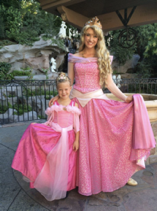
I chose this picture because I think it effectively portrays how little girls can attach themselves to images and characters from their lives to find a sort of sense of self. The most popular characters amongst youth are Disney princesses, and their films have huge influences on young girls all over the world. The billions of dollars Disney makes each year off of their movies, merchandise and even their theme parks just goes to show Disney’s impact in our society. Children have very little sense of self and Disney movies are targeted towards them and serve to teach them some form of moral value.
4) Two example of experiential research (going out into the world and experiencing things, first-hand research, daily observations.)
1 “On-Topic Source”
I have a good friend who has been through a lot of breakups. When I first met her, she was in a 3 year relationship and convinced she was going to marry her boyfriend and they’d grow old together on a farm, live happily ever after, but three months later, she broke up with him to date someone else, and was once again convinced that this new man was “the love of her life” and started planning their future together. They dated for about a month. And then again, a couple months later, she found a new man, and after about 5 days together, she would babble to us about how she had never felt this way before and how they were really in love this time. Once again, they broke up after a couple weeks, and she now swears she hates him because she finds him “annoying”.
1 “Big Picture Source”
When I was a little girl, my best friend and I loved to watch dumb TV shows together. As I got older, I started to realize the impact watching mass amounts of TV had on me. My friend and I would watch shows like The Vampire Diaries and fight over which main characters were the hottest and which ones the protagonist should end up with. When I rewatched the show a couple years ago, I realized that the behaviour of a lot of male protagonists is abusive at best. I’ve rewatched a lot of shows I used to watch and in almost every one I realize they’re extremely misogynistic, solely heterosexual, trans exclusionary and generally don’t promote values younger generations are trying to hold in 2020.
What is success in the arts world?
b. What defines a person as being successful?
c. Art isn’t a career.
3. My whole life I’ve been asked what I want to do with my life and I’ve never had a straight answer. To this everyone asks how I expect to be successful if I don’t know what I want to do with my life. I’ve always been a particularly ambitious person, and I have always wanted to be successful, but recently I’ve been questioning what that even means.
4. I want to learn what different people define as success. Is success based on what your goals are? Is success exclusive to the work field? Is success in the eye of the beholder or are you only successful if it matches everyone else’s idea of success?
5. Is success the meaning of life? Or it’s goal? Does everyone feel the need to succeed? Can one person deem themselves successful if no one else sees them as succeeding?
6. A big idea/an investigation.
7. Anyone having an existential crisis. Possibly young artists wanting to follow their dreams but with unsupportive entourage.
8. To explore the idea of success, to discover what true success could be.
10. For my feature story, I’d like to explore the idea of success. Everyone always says that to lead a good life, you must be successful. But what does success really mean? What is success? And who decides what success is? Can success be personal? Or is it defined by international fame? Or money? Or amount of work? If no one knows my name or my work, can I still be considered a successful artist? There are hundreds upon thousands of working screenwriters and actors and painters and filmmakers making money off of their craft, but we do not know their names or faces or work. Does this mean they are not successful? And there are dozens upon millions of sculptors and directors and dancers and writers who excel in their craft and love what they do, but don’t make money out of it. Does this mean they are not successful? Is making money out of your craft key in success? Or is creating enough to consider yourself successful? Is recognition really that important? And why? What would that change?
What is true success in the arts world?
As an artist, what is success?
I was born into a family of artists, but none of them have ever made any real money off of their craft. My grandfather was a cartoonist, my father a filmmaker, my aunt a sculptor and my brother a musician. My brother is the only one to have really pursued the arts as a means to make money, but has always had to work odd jobs to keep a roof over his head, and dumpster dive to feed himself. This has not given me much hope in seeing the arts world as a money making business. At every Christmas gathering, my aunts and uncles, dancers and writers, would gather around me to babble about how talented I was and how I should go to art school and become a real artist. Alas, I’d always brush them off with a roll of my eyes and an unenthused sigh. No one goes to art school, I’d think to myself. Not if you want to be successful.
When I was sixteen years old I started to get more invested in the arts scene. I got a summer job working as a studio assistant and got to meet a variety of artists, all working within the same studio space. One woman made all her money engraving rocks, a practice now long overtaken by machines. She engraved everything from garden stones to tombstones, all in beautiful cursive fonts. Another man specialized in custom made women’s hats. With feathers and flowers, beaded to perfection, for weddings and funerals. Or another woman who spent all day everyday making clay bones. Her goal was to eventually have a pile of bones big enough to fill a room.
All of these artists consider themselves to be successful, and I do, too. They don’t survive off their crafts, they hold jobs outside of the studio, but they make the art they wish to create, and have exposed their pieces in galleries or museums, and some on the heads of rich elderly women attending their grandchild’s christening.
The more artists I meet, the more I wonder about what true success really is. Art as a job is very difficult. The cash flow is unstable at best, and the job itself is under appreciated. Art has never, and is still never being associated with money. And without money, how would one be able to make art? This has always been a problem when considering art as a career. Art doesn’t pay enough.
So if we agree financial success isn’t likely in the arts world, what other possibilities for success are left? Worldwide recognition? When I was twelve I wanted to be a household name, big shot actress, but by the age of 19, I’m considering becoming a full time maid. Hitchcock created masterpieces, and yes they came from a great vision, but his vision was powered by a desire for his work to be seen. This recognition, fame, is the most sought after success out there, not only because money follows fame, but because what is the point of making something if it won’t be seen.
Once upon a time, I received a strange Instagram message. The man in my DMs introduced himself as James, and offered me an offer I could not refuse. James told me that if I agreed to meet up with him and kick him in the balls, repeatedly, until he fell to his knees, he would give me 75$. I, like I believe any truly smart girl would do, accepted with anticipation. But of course, as a smart girl who knows too much about true crime to not take necessary precautions, I asked James if I could bring a friend with me, and he agreed, as long as she would kick him in the balls, too. He seemed like a nice man, he said he studied at Concordia, in the Studio Arts program, and that he was from outside of Toronto. I thought about which friend I would bring with me, but ultimately I chose to bring my best friend Sam. I told her she would get 75$ and she jumped with excitement, but we were also nervous. I made plans for us to meet James in the lobby of one of the Concordia lobbies, and he said he knew a spot from there. I asked another friend to come with us, but follow us as I texted him in my pocket where we were headed. He brought another friend with him, and Sam and I left to go meet James. He seemed like an ordinary kid, kinda scrawny looking. He took us to the elevators and took us to the top floor. I texted my friend what floor we went up to and he followed us from one floor down. James brought us through half a dozen halls before reaching the stairwell. To be completely honest, I’ve never been to a more romantic spot. The wall was glass and the sun was setting over the city, a bright orange glow covering the buildings with light. Sam and I stared out in awe of the view, while James put his backpack down. Sam and I debated over who should go first, but I let her have the first kick. She kicked and kicked for a couple minutes, with every thud of her boot hitting his sweatpants escaped a little murmur from James’ lips. She eventually stopped, and James rearranged himself. He got back into his half squat position and I took a swing. Thump. Thump. Thump. Thump. After every series of kicks, Sam and I would laugh, still a bit shocked that James wasn’t trying to murder us. With big smiles we would high five between shifts at the Whac-A-Mole, encouraging each other to really kick as hard as we could. Eventually James fell to his knees, and declared that finally he was pleased. He gave us each our 75$, and we split ways. Later my friend who followed us sent me an audio recording taken from the stairwell we were in. All you can hear is the echo of ball kicking and laughing.
Once I got a strange Instagram from a man offering me money for a bizarre service. He wanted me to kick him in the balls so many times that he would fall to his knees. Of course, as any money hungry person would do, I accepted. I did make sure to take security precautions though. I asked this man, who told me his name was James, if I could bring a friend with me, and he agreed, but only if she’d kick him in the balls, too. I asked my best friend Sam to do it with me, you know, as a form of bonding, and she agreed. Because we are anxious people, we started overthinking and believed James might try to kidnapped us, so we asked a friend of ours who does martial arts to secretly follow us. We met up with James at Concordia and he took us to a stairwell on the top floor of the building we were in. The view from there was absolutely amazing. We were so high the whole city was visible and drowning in sunset light. We put our things down and got prepared, and started taking swings. With every kick came a small groan from James and a chorus of laughter from us. We still could not believe James’ was paying us to kick him in the balls. We started really enjoying kicking balls. After James finally fell to his knees, he payed us, and we split ways.
Once Upon a Time I received a rather peculiar Instagram message from a man who called himself James. James had a strange desire, a craving that he begged me to satisfy, and in exchange for my troubles, he offered me 75 pieces of gold. I, scared to go alone, asked Sir James if I could invite another lady to tag along, and he exclaimed “Yes! As long as she’ll supply, too!” So I asked my friend Samantha to attend this ball kicking event with me and she happily accepted, both excited to make a couple coins. We invited a pair of lads to secretly follow us to ensure our safe return to our families that evening. We met James at Concordia and we followed him to a sunlit staircase with a view over the city. Once at our final destination, we took off our winter coats and placed them in piles on the steps. James positioned himself, awaiting his treat, and Samantha delivered. Kick after kick, James groaned and moaned with what seemed like a strange mix of pleasure and pain. We took turns kicking, each laughing as we tried to swing our feet as hard as possible. James fell upon his knees eventually, and we left, satisfied, with 75 gold coins more to our names. Samantha and I still look back fondly of our brief time with James, and how much we truly enjoyed kicking balls.
This is an example post, originally published as part of Blogging University. Enroll in one of our ten programs, and start your blog right.
You’re going to publish a post today. Don’t worry about how your blog looks. Don’t worry if you haven’t given it a name yet, or you’re feeling overwhelmed. Just click the “New Post” button, and tell us why you’re here.
Why do this?
The post can be short or long, a personal intro to your life or a bloggy mission statement, a manifesto for the future or a simple outline of your the types of things you hope to publish.
To help you get started, here are a few questions:
You’re not locked into any of this; one of the wonderful things about blogs is how they constantly evolve as we learn, grow, and interact with one another — but it’s good to know where and why you started, and articulating your goals may just give you a few other post ideas.
Can’t think how to get started? Just write the first thing that pops into your head. Anne Lamott, author of a book on writing we love, says that you need to give yourself permission to write a “crappy first draft”. Anne makes a great point — just start writing, and worry about editing it later.
When you’re ready to publish, give your post three to five tags that describe your blog’s focus — writing, photography, fiction, parenting, food, cars, movies, sports, whatever. These tags will help others who care about your topics find you in the Reader. Make sure one of the tags is “zerotohero,” so other new bloggers can find you, too.

 Elena's 5th Wordpress Blog