How do romance movies affect our perspective of love?
(I know this is in the wrong place but I cannot, for the life of me, figure out where it’s supposed to go and how to create the little section that allows you to chose?? I couldn’t find the video explaining it on the class blog and every time I try to figure this out I get frustrated and have to step away from my computer. Technology is too difficult.)
1) Four scholarly sources (journals, peer-reviewed articles, etc.)
2 “On-Topic Sources”
- Fairy Tales between Transformation and Repetition: How Audiences Rethink the Big Romantic Myth through Disney Princess Stories
Menise, Tatjana. “Fairy Tales between Transformation and Repetition: How Audiences Rethink the Big Romantic Myth through Disney Princess Stories.” Sign Systems Studies, vol. 47, no. 3/4, July 2019, pp. 526–551. EBSCOhost, doi:10.12697/SSS.2019.47.3-4.08.
This article explained fairy tales and how they are found in Disney movies and how those shape of view of romance.
I think this study was really insightful towards how fairy tales have evolved over time to fit into a feminist perspective. The study explained the importance of such fair tales in our world and how they serve to teach values and concepts to young audiences. It further explains how Disney has made many fairy tales and other cultural tales more accessible to the public. One example given that really stuck out to me was a scene from Cinderella I had completely forgotten about that I will most certainly want to discuss in my article.
- Happily Ever After: The Romance Story in Popular Culture
Roach, Catherine M. Happily Ever After : The Romance Story in Popular Culture. Indiana University Press, 2016. EBSCOhost, search.ebscohost.com/login.aspx?direct=true&db=nlebk&AN=1190895&site=eds-live&scope=site.
This book discusses a multitude of subject in regards to romance in popular culture, including romance novels, biblical relations, and erotica.
I chose this book because it explored romance culture through a variety of different aspects of our world and lives. The author also wrote about Christianity and how biblical stories are also a big part of the romance perspective and love culture in our society, which is one point I completely forgot about because I’m not religious, but I think this is a good way to contextualize romance in our society. This also gave me the idea I could talk about heterosexuality in my article, and potentially discuss how heterosexual love is also the most prominent form of love shown in movies and media.
2 “Big Picture Sources”
- Oppawsky, Jolene. “The Nurse Sees It First The Effects of Parental Divorce on Children and Adolescents.” Annals of Psychotherapy & Integrative Health, July 2014, pp. 1–8. EBSCOhost, search.ebscohost.com/login.aspx?direct=true&db=a9h&AN=103010834&site=ehost-live&scope=site.
This source discusses the many different medical effects of emotional turmoil caused by divorcing parents.
I chose this source because I think that to properly understand the psychology behind happy endings, I have to properly understand the reality of what happens after the cameras stop rolling. I know many people with divorced parents who have talked about how traumatic the experience was, and this article really helped put those feelings into a picture, I think this text was interesting because it fully explained and gave many examples of the effects of divorce on children but through a medical point of view, as the piece is written through the point of view of a nurse.
- Ey, Lesley-Anne. “Sexualised Music Media and Children’s Gender Role and Self-Identity Development: A Four-Phase Study.” Sex Education, vol. 16, no. 6, Nov. 2016, pp. 634–648. EBSCOhost, doi:10.1080/14681811.2016.1162148.
This explores and studies the relation between popular music and its effects on children.
I chose this source because exploring gender roles and self identity are two things I would like to talk about in my feature piece. I think exploring how media shapes us into the people we become is very interesting and music wasn’t one of the medias I had thought about before I read this. I thought it was an interesting piece, and explored how children loved certain songs and music videos, and how that affected them. I also enjoyed reading about some of the studies they had on the subject, because I found how they approached studying groups of children very interesting.
2) Four non-scholarly sources (feature stories, blogs, opinion pieces, etc.)
2 “On-Topic Sources”
- Why do we crave happy endings? https://www.rifemagazine.co.uk/2017/02/why-do-we-crave-happy-endings/
This article discusses happy endings and the possible reasons we all want them.
I liked this article because it pointed out a couple good reasons for why we crave happy endings and helped contextualize this desire for me with a bigger psychological need. It also mentioned princess movies and how they always ended with the best possible endings and how we are now left with a sense of craving another happily ever after. The main point made for why we crave happy endings is as an escape from our reality, where things aren’t as magical and perfect as they are seen on screen. I like this idea because it’s contrary to the belief that these happy endings will give you unrealistic expectations of the real world.
2) Are Romantic Movies Bad for You?http://content.time.com/time/health/article/0,8599,1868389,00.html
I like this article because it describes the effects of romantic comedies and how couples in counselling often present tropes and misconceptions about real love and romance from Hollywood movies. I liked one of the studies talked about in the article about interviewing students about their beliefs about love after watching different movies, and having their beliefs match the values presented in the films. I also enjoyed this article because it presented counterarguments towards why people want to watch romance movies, suggesting hope in romantic relationships instead of unreal expectations.
2 “Big Picture Sources”
- The Psychological Effect of Children’s movies https://www.winmentalhealth.com/childrens_movies_media_effects.php
This source discusses the effects of movies in relation to children and their behavioural development.
This article actually brought up the fact that characters in movies are more developed and easier to connect with than characters in other forms of media. I hadn’t really considered how television is easier to buy into because it brings stories to life, which also makes it easier to affect children. I really liked this article because it discussed many different sides of how children are affected by movies and discussed movie scenes from horror films and princess movies too. It also mentions how movies have increasingly adult content in children’s films and how that can have effects on children’s aggression levels.
2) When Kids Are Straight Until Proven Otherwise https://www.theatlantic.com/ideas/archive/2019/08/harmful-presumption-kids-are-straight/596185/
I chose this article because it described in detail the feelings of being gay as a young child but living in a heterosexual world, expressing a severe feeling of sadness, isolation and alienation. I also liked this article because it pointed out a couple legal matters I hadn’t known about or considered much regarding young gay children performing drag. It also explored the link between gender conformity and gender non-conformity in children affecting the future sexualities of what the article calls pre-GLB kids, but also mentions how some children don’t know until adulthood that they’re gay.
3) Two Cultural or artistic artifacts (works of art, songs, paintings, advertisements, TV shows.)
1 “On-Topic Source”
For my on-topic cultural artifact source I chose the song Love Song by Taylor Swift. I chose this song because in the lyrics Swift describes a love affair she compares to Romeo and Juliet, but with a happy ending. Swift’s lover supposedly gets down on one knee and tells her he loves her, asking her hand in marriage. I think this song is the perfect cultural artifact because it’s about everything I want to talk about in my article: classic romance stories, happy endings, the concept of true love, and marriage. I also found this interesting considering one of my other sources describes the link between development in youth and music. On top of that, I also like the fact that every song Swift sings is about a different “one true love”, which is both ironic and perfect to help describe our modern day view of love.
1 “Big Picture Source”
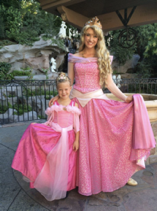
I chose this picture because I think it effectively portrays how little girls can attach themselves to images and characters from their lives to find a sort of sense of self. The most popular characters amongst youth are Disney princesses, and their films have huge influences on young girls all over the world. The billions of dollars Disney makes each year off of their movies, merchandise and even their theme parks just goes to show Disney’s impact in our society. Children have very little sense of self and Disney movies are targeted towards them and serve to teach them some form of moral value.
4) Two example of experiential research (going out into the world and experiencing things, first-hand research, daily observations.)
1 “On-Topic Source”
I have a good friend who has been through a lot of breakups. When I first met her, she was in a 3 year relationship and convinced she was going to marry her boyfriend and they’d grow old together on a farm, live happily ever after, but three months later, she broke up with him to date someone else, and was once again convinced that this new man was “the love of her life” and started planning their future together. They dated for about a month. And then again, a couple months later, she found a new man, and after about 5 days together, she would babble to us about how she had never felt this way before and how they were really in love this time. Once again, they broke up after a couple weeks, and she now swears she hates him because she finds him “annoying”.
1 “Big Picture Source”
When I was a little girl, my best friend and I loved to watch dumb TV shows together. As I got older, I started to realize the impact watching mass amounts of TV had on me. My friend and I would watch shows like The Vampire Diaries and fight over which main characters were the hottest and which ones the protagonist should end up with. When I rewatched the show a couple years ago, I realized that the behaviour of a lot of male protagonists is abusive at best. I’ve rewatched a lot of shows I used to watch and in almost every one I realize they’re extremely misogynistic, solely heterosexual, trans exclusionary and generally don’t promote values younger generations are trying to hold in 2020.
 Elena's 5th Wordpress Blog